Academics

HCSS offers a rigorous, STEM-focused, college-preparatory education with strong literacy and math instruction, small class sizes, and personalized support so every student is prepared for future success.

Our Approach to Learning

Contextual Teaching and Learning (CTL) is our school-wide instructional philosophy—designed to make learning meaningful, engaging, and connected to the real world. We believe students learn best when new knowledge aligns with their own experiences, memories, and perspectives.

At HCSS, every class begins with a conversation about why the lesson matters and how it applies beyond the classroom, in real time and real life. Teachers intentionally build bridges between new learning and what students already know, helping them see the “big ideas” of each unit.

Through multi-modal instruction and carefully designed learning experiences, teachers help students connect prior knowledge to authentic, real-world situations—making learning not only relevant, but lasting.

Project Based Learning

Project-Based Learning (PBL) is a school-wide instructional approach at HCSS that builds essential 21st-century skills—teamwork, critical thinking, effective use of technology, and strong communication in both writing and speaking.

PBL provides hands-on learning experiences that strengthen problem-solving, deepen understanding, and prepare students for college, careers, and real-world challenges.

Each unit begins with a Driving Question that guides students’ inquiry and frames their research and discovery. Throughout the process, students engage in structured checkpoints that offer feedback, opportunities for revision, and support to help them produce high-quality work.

Projects culminate in a public showcase—either through a community webinar or a presentation to faculty and student representatives—highlighting student learning, creativity, and collaboration.

Culture of Classroom Discourse

HCSS teachers foster an Accountable Talk classroom environment where students feel confident expressing their ideas, opinions, and understandings—even when they make mistakes. This supportive culture encourages higher-order thinking and helps students reflect on their learning while communicating their knowledge effectively in both oral and written forms.Teachers and students work together to build academically productive discussions that support rigorous learning within a thinking-centered curriculum.

Meaningful, student-driven conversations are a hallmark of the HCSS classroom. Students’ thoughts are valued, and they are consistently encouraged to speak, listen, question, and respond to one another—creating a vibrant culture of inquiry and shared understanding.

Technology Infusion

Technology at HCSS is a powerful platform that opens doors to individualized learning, innovative resources, and new ways of thinking—an essential component of lifelong learning in today’s world.

At HCSS, technology is both a catalyst for learning and a tool that connects academic content to real-world applications. Thoughtful technology infusion helps students bridge the gap between skills learned in the classroom and the tasks and interactions they will encounter beyond school.

Every student receives a Chromebook for use throughout the year, enabling access to digital tools, research opportunities, and interactive learning experiences. Teachers integrate technology to enhance collaboration, conduct real-time assessments, facilitate academic discussions, support research projects, and deliver engaging content through videos, annotated lectures, and presentations.

Through purposeful use of technology, HCSS ensures students learn, create, and communicate in ways that prepare them for the modern world.

Data-Driven Instruction

Data-driven instruction is a core component of the HCSS academic program, ensuring every student receives the targeted support they need to grow and excel.

Students complete benchmark assessments throughout each quarter, along with school-wide exams in math, ELA, and science. These assessments provide meaningful insight into student progress and mastery of essential skills.

Faculty carefully review all results to identify strengths and areas for improvement. Based on this analysis, teachers create individualized action plans for students. Skills that require additional reinforcement are retaught using fresh strategies, engaging activities, and differentiated supports.

To help students stay on track, personalized assistance is offered through study hall tutoring, after-school programs, and our voluntary Saturday School sessions—providing multiple pathways for students to strengthen their understanding and achieve academic success.

Individualized Support

HCSS is committed to improving every student’s academic performance through personalized attention and meaningful support. Our teachers work closely with students inside and outside the classroom, allowing them to truly understand each learner’s strengths, challenges, and academic needs.

Pull-out sessions and small-group tutoring are intentionally designed to provide focused instruction for students who need additional help. Progress is monitored regularly, ensuring that support remains responsive and effective. School-wide exam data and detailed analysis reports help identify students who may need more targeted interventions, guiding the creation of individualized support plans.

Through consistent follow-up, differentiated instruction, and a strong culture of care, HCSS ensures every student has the resources and guidance needed to thrive.

Retrieval Practice

At HCSS, retrieval practice is an essential part of daily instruction and is used intentionally to strengthen student learning. Teachers regularly incorporate activities that prompt students to recall previously learned material—such as cold calls, flashcards, low-stakes quizzes, quick writes, and short review cycles. These strategies help reinforce learning, increase retention, and ensure students are actively engaging with content over time.

Teachers revisit key concepts through spaced practice, allowing students multiple opportunities to apply their knowledge across different lessons and units. This repeated, varied exposure helps students deepen their understanding and successfully transfer what they’ve learned to new and more complex situations.

By integrating retrieval practice consistently and purposefully, HCSS supports long-term mastery and helps students build strong, confident academic habits.

AP (Advanced Placement) and Dual Credit Programs

The HCSS Advanced Placement (AP) program gives students the opportunity to take college-level courses while still in high school. Students who earn qualifying scores on AP Exams may receive undergraduate college credit or advanced standing at many colleges and universities.

AP Capstone Diploma Program

AP Capstone is an advanced diploma program created by the College Board for students who complete a specialized two-course sequence—AP Seminar and AP Research—alongside their other AP coursework. This program enhances students’ ability to think critically, conduct independent research, collaborate effectively, and make evidence-based decisions.

Built to complement traditional AP classes, AP Capstone helps students develop the skills of curious, independent, and scholarly learners—skills highly valued by colleges and universities.

HCSS proudly offers the AP Capstone Diploma Program to all high school students.

AP Courses

AP Langauge Art and Composition
AP Langauge Literature
AP Psychology
AP CalculusAP Pre-Calculus
AP Statistics
AP Biology
AP ChemistryAP PhysicsAP Environmental Science
AP Computer Science Principles
AP Computer Science A
AP WorldHistory
AP US History
AP Human GeographyAP SeminarAP Research

Ready for Challenge

When a student chooses to take an AP course, they demonstrate to colleges and universities that they are prepared for the demands of an undergraduate environment. AP courses show admissions officers that a student has taken on the most rigorous academic opportunities available and has developed the skills needed to meet college-level expectations.

In an increasingly competitive admissions landscape, this commitment to challenging coursework stands out—highlighting a student’s motivation, resilience, and readiness for the next level.

DUAL CREDIT PROGRAM

Through partnerships with local colleges and universities, eligible HCSS students can enroll in college courses and earn credits that count toward both their high school diploma and a future post-secondary degree.

In addition to earning these dual credits, students gain early exposure to real college coursework, helping them build confidence and readiness for higher education. Participation in the Dual Credit Program can also reduce the long-term cost of completing a college degree by allowing students to earn credits while still in high school.

ACADEMIC SUPPORT

HCSS is committed to ensuring that every student has the resources and guidance needed to reach their highest academic potential. Our approach combines personalized attention, targeted interventions, and a strong culture of support that helps students build confidence, master essential skills, and stay on track for long-term success.

Teachers work closely with students to provide clarification, offer additional help, and create opportunities for deeper learning—both during and beyond regular class time. Through this comprehensive support system, HCSS empowers all learners to grow, thrive, and achieve their goals.

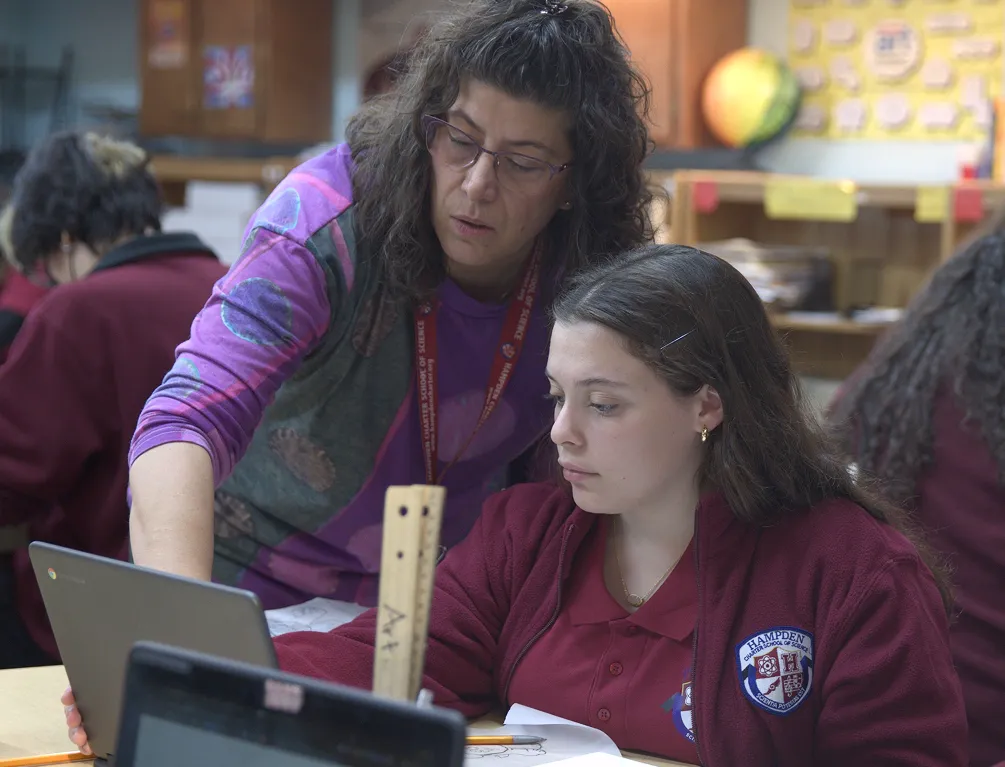
Teacher assisting a female student in a red school uniform with a tablet in a classroom.

Tutoring Programs (Pull out, After-School, and Saturday)

HCSS provides multiple layers of tutoring support to ensure every student has the opportunity to strengthen their skills and reach their full academic potential.

Using data from internal assessments and state test reports, teachers and administrators identify students who may benefit from additional help. During action plan meetings, study groups are formed collaboratively by core subject teachers, special education staff, and ELL specialists. Once groups are created, designated teachers and tutors work with students in targeted pull-out sessions, focusing on the specific skills each student needs to improve

Tutoring is delivered by HCSS classroom teachers or trained professionals hired by the school, ensuring students receive high-quality, personalized support. In addition to pull-out sessions, students can participate in after-school tutoring and Saturday School, giving them multiple avenues to close learning gaps, reinforce key concepts, and elevate their academic performance.

Through this comprehensive tutoring model, HCSS helps students gain confidence, master essential skills, and stay on a strong path toward academic success.

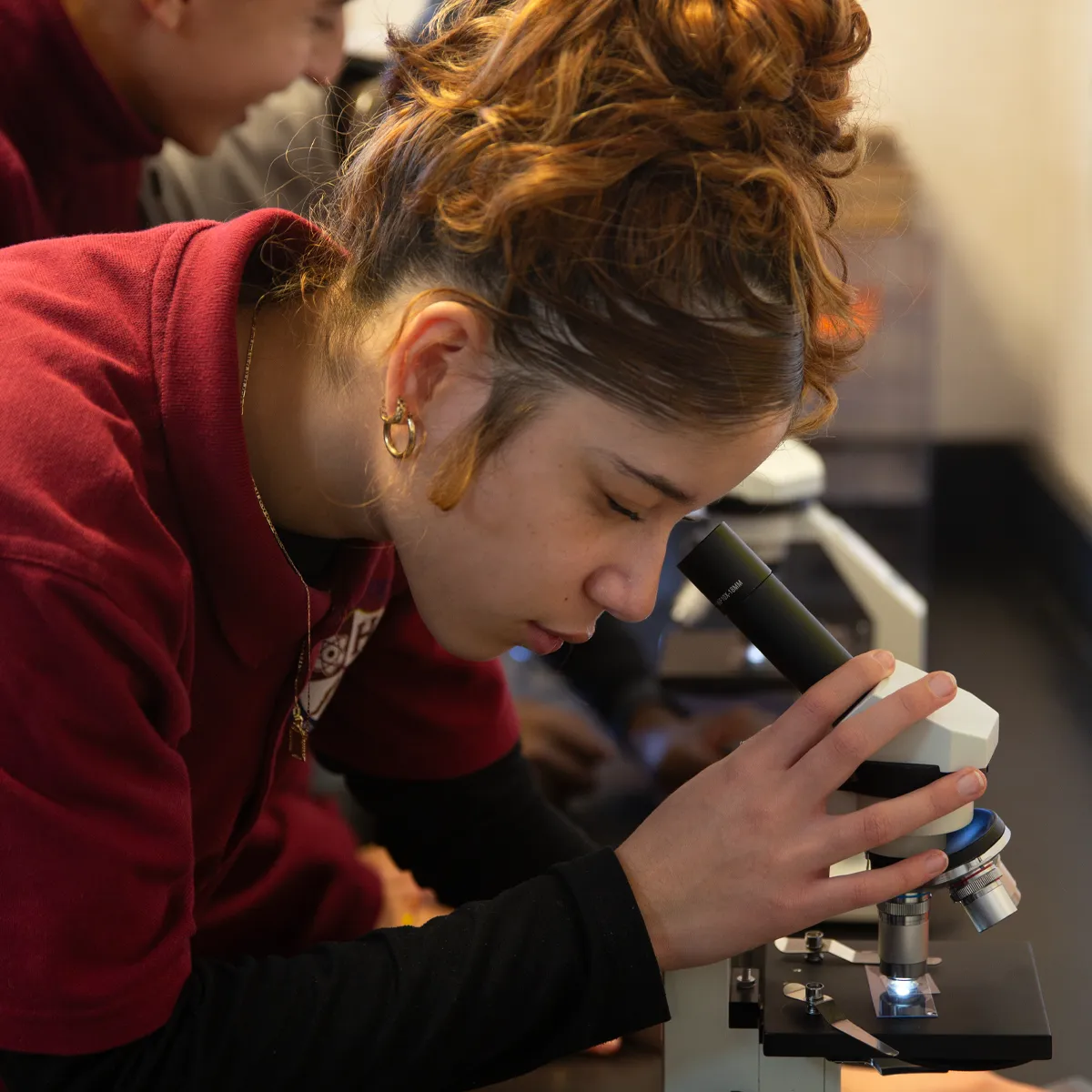
Young woman with curly hair in a maroon shirt looking into a microscope in a lab setting.

Online Tutoring

At HCSS, individualized support extends beyond the classroom. We proudly offer expert online tutoring for all students, providing flexible academic help beyond the school day.

Online tutoring is available in ELA, Math, Science, and Social Studies/History during scheduled after-school hours. Sessions are led by HCSS teachers who guide students through challenging concepts, provide personalized feedback, and help reinforce classroom learning.

Through this virtual support option, students can access high-quality academic assistance from anywhere—ensuring they stay engaged, confident, and prepared for success.

ADVANCED PROGRAMS

Robotics Team

HCSS Robotics Club is a great program where the students can learn, discover, innovate, and challenge themselves in a competitive environment to develop a community of students passionate about science and technology with the skills and initiative to become the next generation of leaders and create positive change in their respective career fields. We engage them in science, technology, engineering, and mathematics by allowing them to work on the construction of physical robots. Finally, in addition to regular team practice, vacation sessions also occur as sleep-away camps that foster scholarship and great friendships among the students.

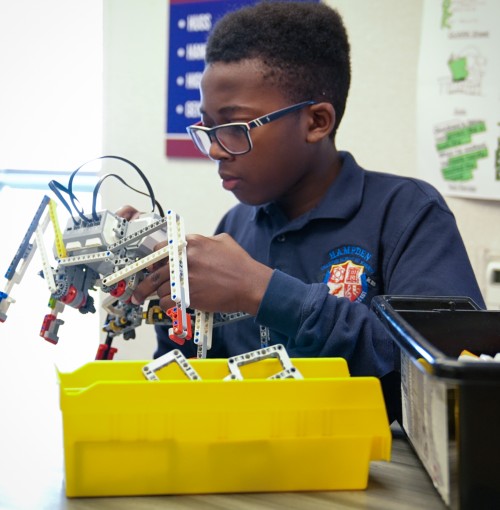
Boy wearing glasses assembling a robotic structure using Lego robotics parts at a desk with yellow and black storage bins.
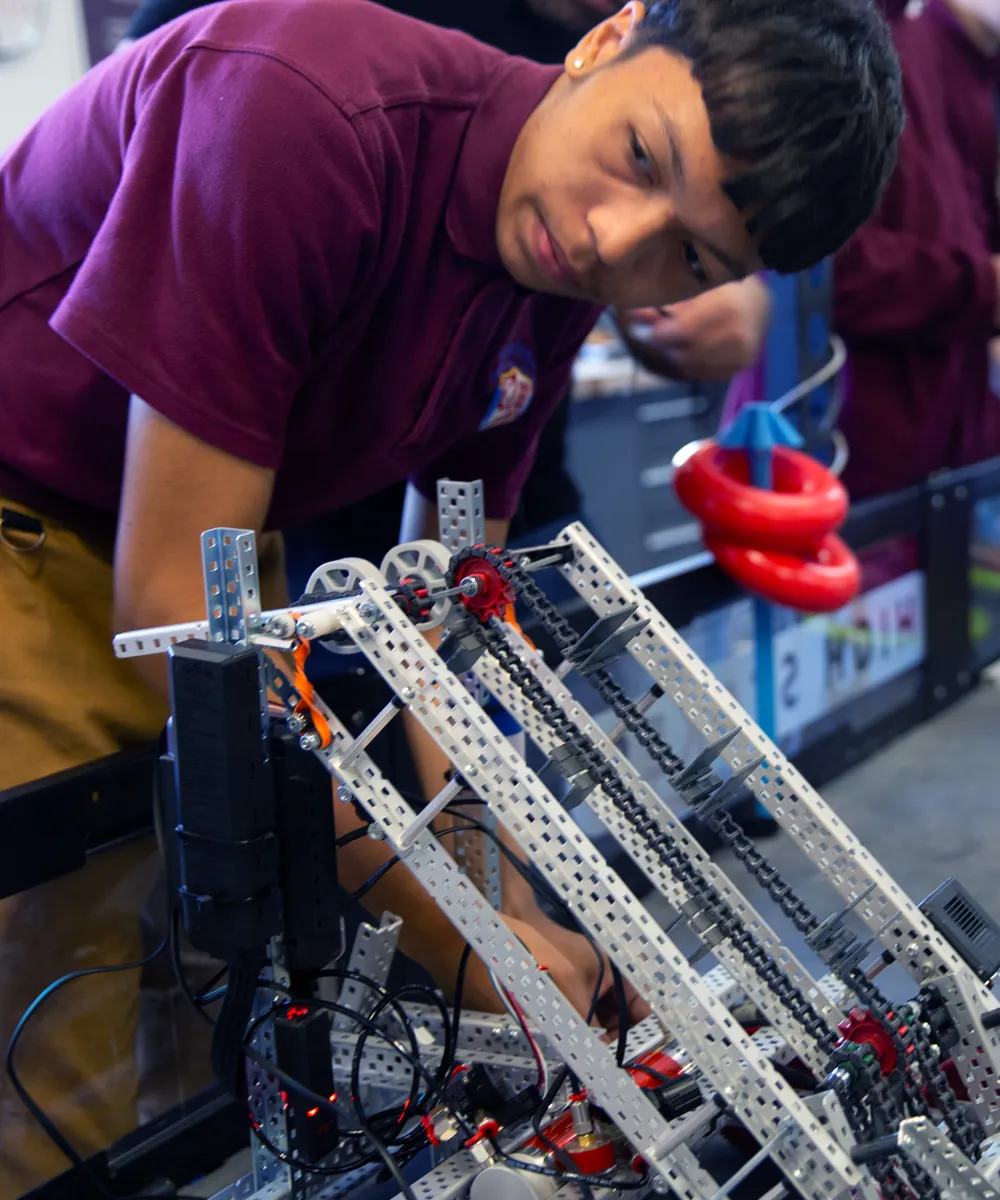
Young man in a maroon shirt working on a metal and chain robotics project indoors.

Drone Team

The HCSS Drone Team gives students a unique opportunity to explore emerging technology through hands-on design, flight, and competition. This program attracts students who are curious about aviation, engineering, and innovation—empowering them to develop technical skills that are increasingly valuable in modern STEM fields.

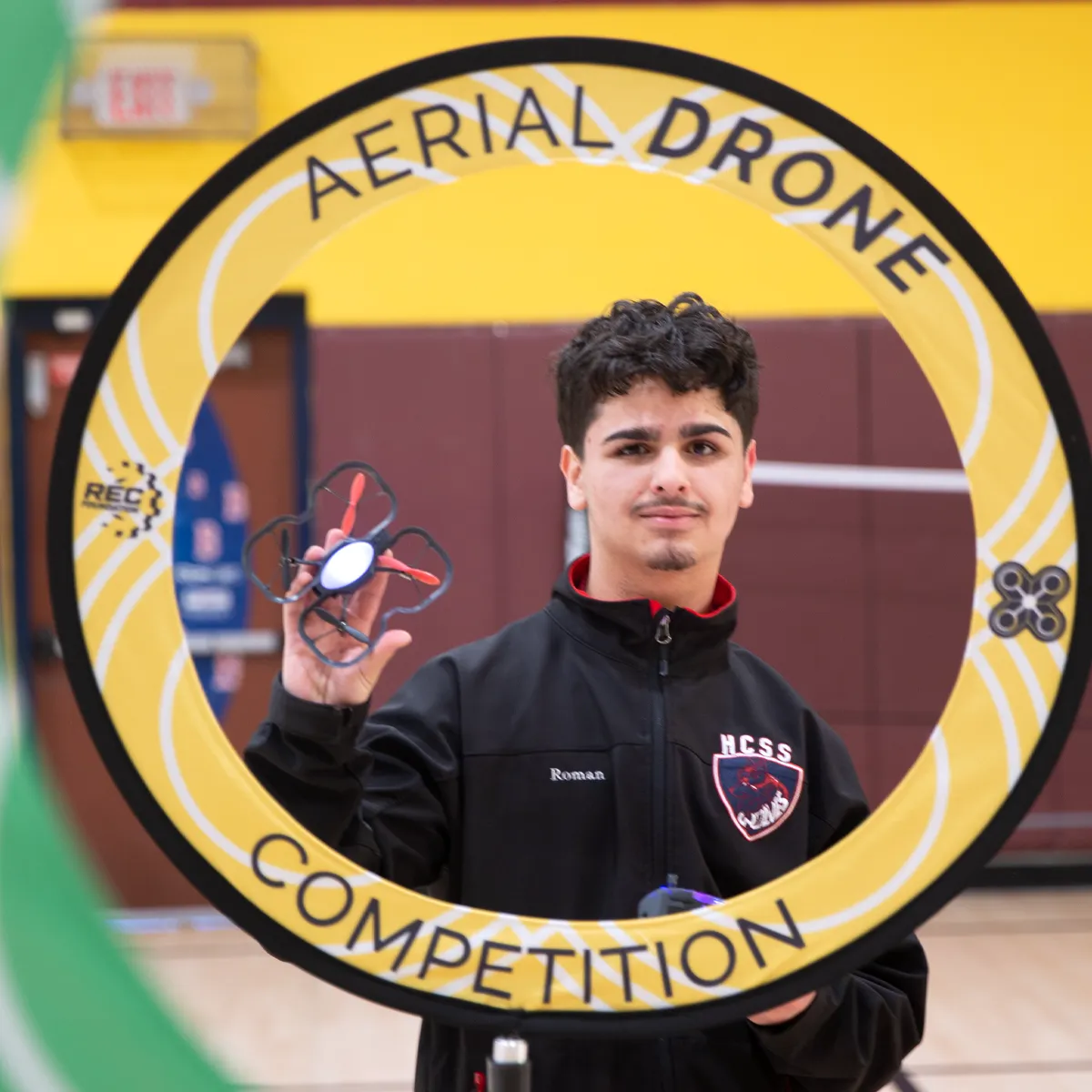
Young man holding a small quadcopter drone in a gymnasium, framed by a yellow ring labeled 'Aerial Drone Competition'.

Students learn the fundamentals of drone construction, programming, and safe flight operation while collaborating on real-world challenges and competitive missions. Through guided practice and skill-building sessions, they strengthen problem-solving abilities, precision, and teamwork.

The Drone Team also participates in special workshops and extended learning opportunities that deepen expertise and build lasting connections among members. This advanced program exemplifies the HCSS commitment to fostering creativity, leadership, and excellence through cutting-edge STEM experiences.

Science Olympiad

The HCSS Science Olympiad Team invites high-achieving and science-minded students to take on advanced academic challenges in a competitive, team-based environment. Guided by the science department, this program is designed to significantly deepen students’ scientific knowledge, curiosity, and problem-solving skills.

Team members prepare for a wide range of STEM events with the goal of competing at regional, state, and national Science Olympiad tournaments. Through this rigorous preparation, students take ownership of their learning, strengthen their academic performance, and develop a genuine passion for lifelong learning.

In addition to regular practices, the team participates in special vacation sessions and sleep-away camps that promote collaboration, scholarship, and strong friendships. The Science Olympiad program reflects the HCSS commitment to fostering excellence and enthusiasm for science through meaningful, challenging experiences.

AMC Math Team

The HCSS AMC Math Team participates in the Mathematical Association of America’s American Mathematics Competitions (AMC)—the nation’s leading program for developing strong mathematical thinkers and problem-solvers. Through structured preparation, classroom enrichment, and friendly competition, the AMC program helps identify student talent and nurtures a genuine love for mathematics.

Participation in AMC strengthens students’ analytical reasoning, creativity, and critical thinking—skills essential for success in STEM fields and future careers in an innovative society.

In addition to the national AMC competitions, HCSS students also compete in the Western Massachusetts Math League (WMML), where they challenge themselves against top students from schools across the region.

The AMC Math Team reflects our commitment to fostering advanced academic opportunities and celebrating mathematical excellence.

MathCounts

MathCounts is a national middle school program that builds strong mathematical thinking through interactive coaching and exciting, “bee-style” competitions. At HCSS, participating students meet weekly throughout the year to develop problem-solving skills, strengthen their mathematical understanding, and prepare for local, state, and national competitions.

Through challenging activities, team-based practice, and engaging math games, MathCounts inspires confidence, persistence, and a true enjoyment of mathematics.

https://www.mathcounts.org

SPED AND ELL SERVICES

Special Education(SPED)

HCSS is committed to providing high-quality, comprehensive services for students with disabilities in full accordance with state and federal regulations. We believe that the general education curriculum—guided by the Massachusetts Curriculum Frameworks—offers students with disabilities the strongest foundation for success in school and beyond. Improving educational outcomes for students with disabilities is essential to ensuring equal opportunity, full participation, independent living, and long-term self-sufficiency.

HCSS embraces the practices of inclusion and Universal Design for Learning (UDL). Inclusion ensures that students with disabilities learn in age-appropriate general education classrooms while receiving the specialized instruction identified in their Individualized Education Programs (IEPs). Through UDL, teachers design lessons that are flexible, accessible, and responsive to diverse learning needs.By combining inclusion with UDL, HCSS provides an academically rigorous education in the least restrictive environment, ensuring students with disabilities receive the right support while fully engaging in the core curriculum.To meet individual needs, HCSS also offers:Specialized study halls with homework supportMentoring programsA positive behavior support systemPull-out servicesCo-teaching and collaborative instructional models

Together, these supports create a learning environment where every student can grow, thrive, and reach their highest potential.

Colorful abstract illustration of a brain composed of interconnected gears, arrows, pathways, and tech symbols representing ideas and innovation.
Colorful logo with the words 'English Language Learners' and a circle of multicolored handprints.

English Language Learner(ELL) Program

At HCSS, we are committed to creating a warm, inclusive classroom environment where English Language Learners are fully supported. Using a Sheltered English Immersion (SEI) instructional model, all teachers work to ensure that ELL students feel confident, valued, and prepared to succeed.

Students receive both direct ESL instruction and sheltered content instruction aligned with the latest Massachusetts Curriculum Frameworks and guided by the WIDA English Language Development (ELD) Standards. This ensures that students develop strong English language skills while also mastering grade-level academic content.

Our curriculum is intentionally designed using the SEI model to provide effective, appropriately leveled English language and content instruction. Lessons in sheltered content classrooms are tailored to match each student’s age, grade level, and language development needs.

HCSS ensures that all ELL students have equal access to academic programs and services. They are taught the same academic standards, offered the same learning opportunities, and supported in meeting high expectations. ELL students also have full access to advanced courses, credit-bearing opportunities, and the full range of school programs—ensuring they can participate fully and thrive academically.Through strong instruction, inclusive practices, and a commitment to equity, the HCSS ELL Program helps students grow with confidence and achieve success in school and beyond.

GRADUATION REQUIREMENTS

HCSS graduation requirements for class of 2023 and beyond listing subjects and required credits including English Language Arts 24 credits, Mathematics 32 credits, Science 12 credits, History/Social Science 16 credits, Foreign Language 8 credits, Physical Education 8 credits, Additional Electives 60 credits, and Senior Research or AP Research, totaling 160 credits.
Table showing sample high school credits by grade from 9 to 12, including required courses and electives, with each grade totaling 40 credits.
HCSS graduation requirements for class of 2023 and beyond listing subjects and required credits including English Language Arts 24 credits, Mathematics 32 credits, Science 12 credits, History/Social Science 16 credits, Foreign Language 8 credits, Physical Education 8 credits, Additional Electives 60 credits, and Senior Research or AP Research, totaling 160 credits.

It is the philosophy of the Hampden Charter School of Science that students respond more positively to the opportunity for success than to the threat of failure. We seek, therefore, through our instructional programs, to make achievement both recognizable and possible for students. We emphasize achievement in our processes of evaluating student performance. We report achievement through the use of letter grades. A student earns full credit by completing the course with at least a D (65 average). A student shows mastery in a course by completing a series of requirements for a course. These requirements include unit assessments, end of quarter assessments and/or a portfolio project. 

A students must  satisfactorily complete the following coursework in English Language Arts to meet the graduation requirements: Four years of English Language Arts 

9th grade: ELA 9 or ELA 9 Honors

10th grade: ELA 10 or ELA 10 Honors or ELA 10: AP Seminar

11th grade: ELA 11 or ELA 11 Honors or AP English Language and Composition

12th grade: ELA 12 or ELA 12 Honors or AP English Literature and Composition

The Massachusetts English Language Arts and Literacy (ELA) Curriculum Framework identifies essential skills across four strands:

Reading, Writing, Speaking and Listening, and Language. Students must master the ability to comprehend, interpret, and analyze a diverse range of complex literary and informational texts, cite textual evidence, and understand how craft and structure impact meaning. They must also learn to produce clear and coherent writing for various tasks, purposes, and audiences, developing and strengthening their work through revision and editing while demonstrating a command of Standard English conventions and a rich vocabulary. A student demonstrates mastery in ELA by consistently applying these integrated skills in high-quality work, such as analyzing and making arguments based on evidence from texts, participating effectively in collaborative discussions, delivering purposeful oral presentations, and successfully completing standards-aligned assessments, including the MCAS, which certify their readiness for college, careers, and civic participation.

A student will show mastery in English Language Arts (ELA) by consistently integrating and applying the skills across the four strands—Reading, Writing, Speaking and Listening, and Language—as outlined in the Massachusetts Curriculum Framework. Mastery is demonstrated when a student can effectively analyze complex literary and informational texts, citing strong evidence to support interpretations of theme, structure, and author's craft; produce clear and coherent writing for various purposes (argument, exposition, narrative), exhibiting command of Standard English conventions, a robust vocabulary, and a routine process of revision; and participate constructively in collaborative discussions, presenting ideas logically and persuasively. Ultimately, this integrated application is certified through high-quality, standards-aligned work, including successful performance on portfolio tasks and state assessments like the MCAS, which require synthesizing these skills for sophisticated communication and analysis.

A students must  satisfactorily complete the following coursework in Mathematics to meet the graduation requirements: Four years of Mathematics

9th grade: Algebra 1 or Geometry Honors

10th grade: Algebra 2 Honors or Geometry or Geometry Honors

11th grade: Algebra 2 or PreCalculus or PreCalculus Honors

12th grade: Probability and Statistics or Calculus or Calculus Honors

The Massachusetts Mathematics Curriculum Framework is built on two key components: the Content Standards (which define the knowledge and skills across domains like Number and Quantity, Algebra, Functions, Geometry, and Statistics and Probability) and the eight Standards for Mathematical Practice (which describe the habits of mind for mathematical reasoning). A student demonstrates mastery by integrating both. This means they must not only show procedural fluency in calculating and manipulating mathematical expressions (the "how"), but also deep conceptual understanding of why those procedures work. Mastery is shown when a student can make sense of problems and persevere in solving them, reason abstractly and quantitatively by moving between problem contexts and mathematical symbols, construct viable arguments to justify their reasoning, and model with mathematics by applying concepts to real-world situations. Ultimately, a student proves mastery by consistently producing rigorous solutions to complex problems, demonstrating precision in their work, and successfully completing standards-aligned assessments, including the MCAS, which require them to synthesize and apply their skills and knowledge.

A student will show mastery in Mathematics by synthesizing both conceptual understanding and procedural fluency, as defined by the Massachusetts Curriculum Framework. This mastery is demonstrated when a student not only efficiently performs calculations and manipulations (procedural fluency) but also deeply understands why those methods work (conceptual understanding). The ultimate sign of mastery is the consistent application of the eight Standards for Mathematical Practice, enabling the student to make sense of problems, reason abstractly and quantitatively, model real-world situations using mathematical concepts, and construct viable arguments to justify their logical processes. This integrated proficiency is formally assessed and validated through high-quality, standards-aligned work that provides rigorous solutions to complex, multi-step problems and successful performance on state assessments, such as the MCAS.

A students must  satisfactorily complete the following coursework in Science to meet the graduation requirements: Three years of Science with Lab

9th grade: Biology or Biology Honors

10th grade: Chemistry or Chemistry Honors

11th grade: Physics or Physics Honors

A student demonstrates mastery of the Massachusetts Science and Technology/Engineering (STE) Curriculum Framework by integrating the three dimensions—Disciplinary Core Ideas (DCIs), Scientific and Engineering Practices (SEPs), and Crosscutting Concepts (CCCs)—rather than simply recalling facts. The knowledge and competencies required include understanding the DCIs across Physical Science, Life Science, Earth and Space Science, and Technology/Engineering, which are the fundamental concepts and principles. Crucially, a student must be able to apply the SEPs, which are the skills scientists and engineers use, such as developing and using models, planning and carrying out investigations, analyzing and interpreting data, and constructing explanations or designing solutions. Furthermore, they must use CCCs like cause and effect and systems and system models as intellectual tools to connect and organize knowledge across different scientific fields.

Mastery is ultimately shown when a student consistently applies this integrated understanding to solve novel problems and explain complex phenomena. This is evidenced not through rote memorization, but through performance tasks and high-quality work that requires synthesis and application. For instance, a student shows mastery by successfully completing engineering design challenges that require defining a problem and optimizing a solution, or by carrying out a full scientific investigation where they gather evidence and engage in argument from evidence to support a scientific explanation. Successful performance on standards-aligned assessments, such as the MCAS, which test the ability to synthesize DCIs, SEPs, and CCCs, certifies that a student is proficient in thinking and acting like a scientist or engineer.

A students must  satisfactorily complete the following coursework in History to meet the graduation requirements:

Four years of History 

  • 9th grade: US History I
  • 10th grade: US History II
  • 11th grade: World History I
  • 12th grade: World History II

A student demonstrates mastery in U.S. History, as guided by the Massachusetts History and Social Science Curriculum Framework, by synthesizing essential historical knowledge with critical analysis and inquiry skills. The required knowledge includes major Content Standards related to key eras, turning points, significant ideas, individuals, and themes of United States history, as well as core concepts in Civics, Geography, and Economics. However, true mastery goes beyond factual recall, centering on the ability to perform the Standards for History and Social Science Practice. This means the student can develop focused inquiry questions, evaluate primary and secondary sources for purpose, point of view, and credibility, and organize and synthesize information from multiple sources to understand complex historical developments and differing interpretations.

This integrated competency is evidenced when the student can construct well-supported historical arguments and explanations using valid reasoning and textual evidence. For example, a student shows mastery by effectively analyzing how core democratic and civic values have evolved over time, demonstrating a nuanced understanding of their implications and limitations when taking informed positions on civic issues. Mastery culminates in the student's ability to complete rigorous, multi-faceted tasks, such as Document-Based Questions (DBQs), sustained research projects, and the Civics Project (at the high school level), which require them to apply content knowledge and analytical skills to demonstrate civic knowledge, skills, and dispositions required for responsible citizenship.

All students are required to complete a Senior Research project (or AP Research) before graduation. 

The district ensures students with disabilities have an equal opportunity to meet the Competency Determination (CD) requirements by implementing the federal Individuals with Disabilities Education Act (IDEA) and Massachusetts General Law Chapter 71B (Ch. 766). For every student, an Individualized Education Program (IEP) is developed by the Team, which outlines the specialized supports and modifications necessary to access the curriculum and demonstrate competency. These supports may include accommodations (e.g., extended time, use of a word processor, preferential seating), modifications to the curriculum (changing the content expectations, though the district ensures alignment with CD coursework requirements), and specially designed instruction tailored to the student’s unique needs.

Crucially, the policy includes alternative demonstration methods to meet the CD requirements beyond the standard MCAS test or course completion for students whose disabilities preclude them from meeting the standard requirements even with accommodations. For students with the most significant cognitive disabilities, the MCAS Alternate Assessment (MCAS-Alt), which uses a portfolio of student work aligned with "expanded" standards, is the primary alternative pathway to earn the Competency Determination. For other students, the IEP Team may implement other alternative methods, such as utilizing different evidence of mastery from course performance. The district's commitment is to provide a Free Appropriate Public Education (FAPE) and ensure that the student is afforded every reasonable opportunity to achieve the CD and local graduation requirements before exiting school.

The district provides English Learners (ELs) with an equal opportunity to meet the Competency Determination (CD) requirements by providing Sheltered English Immersion (SEI) programs and a continuum of specialized supports designed to develop both English language proficiency and content mastery simultaneously. All ELs receive English as a Second Language (ESL) instruction aligned with the WIDA English Language Development Standards and grade-level content standards, focusing on the four language domains: listening, speaking, reading, and writing. In their content-area classes, ELs receive Sheltered Content Instruction, where core academic content (such as Math, Science, and History) is made comprehensible through modifications, scaffolding, and accommodations, including the use of visuals, graphic organizers, simplified language, and pre-approved bilingual dictionaries for assessments. For late-enrolling high school ELs, the district conducts a thorough transcript review to determine equivalent coursework and develops an expedited plan, including credit recovery or targeted support, to ensure timely completion of all CD coursework requirements.

Transcript Review and Course-Taking Opportunities

The initial step is a mandatory transcript review conducted by the school administration. This process ensures compliance with state requirements by:

  • Equivalent Course Length and Content: We meticulously compare the student's prior coursework from their sending school(s) to the Massachusetts Curriculum Frameworks' standards for the required graduation requirements. Courses from outside schools are certified as equivalent if the content and instructional time align with the same academic standards and the equivalent of a course in the required content area.
  • Demonstration of Mastery: We accept the sending school’s documentation of course completion and passing grade as initial evidence of mastery. If prior transcripts are unclear or incomplete, the student may be required to complete a portfolio review, a performance-based assessment, or a district-certified end-of-course assessment to demonstrate that they have mastered the core competencies of the missed course.

If the review indicates a coursework deficiency, the student is immediately provided with course-taking opportunities through an individualized academic plan, which may include:

  • Enrollment in required courses during the current school year.
  • Credit recovery options (e.g., summer school, online programs).
  • Schedule adjustments to allow for accelerated or multiple required courses.

The district has established a two-tiered system for students and parents to appeal a final determination that a student has not met the Competency Determination (CD) requirements, starting with a Local CD Appeal Process focused on coursework and mastery evidence. A student or parent must submit a formal written appeal to the High School Principal within 15 school days of receiving the final determination. The Principal, consulting with school administrators and relevant teachers, will review all academic evidence—including coursework, performance tasks, and local assessments—to determine if the student has demonstrated competency. The Principal then issues a decision in writing (including the policy rationale) within 15 school days of receiving the appeal. If this appeal is denied, the student or parent may escalate the matter by appealing the Principal’s decision to the Superintendent within 10 school days, whose decision on local CD matters is considered final within the district.
Apply Now for 2025-2026

Discover what’s possible at Hampden Charter School of Science.
Knowledge is power!